



Overview
Set within a dense residential part of London, 35 Florida Street forms part of a wider push towards upgrading existing housing stock to meet modern expectations around energy efficiency, longevity and appearance. Rather than redevelopment, the project focused on refurbishment, improving the performance of the existing building while giving it a cleaner, more contemporary identity within the streetscape.
The scheme demonstrates how carefully considered façade improvements can extend the life of residential buildings without major disruption to occupants. Alongside thermal upgrades, the project sought to create a more refined external finish that would sit comfortably within its urban surroundings while delivering long-term durability and reduced maintenance requirements.
Client Challenge
The project team needed to balance several competing priorities across programme, performance and appearance.
Improving Thermal Performance
The existing building required a substantial uplift in energy efficiency to reduce heat loss and improve internal comfort levels for residents. Achieving a significantly improved U-value without introducing unnecessary build-up thickness was a key consideration.
Working Within a Tight Programme
The project operated under a demanding installation programme with limited margin for delays. Material coordination, delivery schedules and ongoing technical support all needed to align closely with site progress to keep the works moving efficiently.
Delivering Long-Term Durability
As a fully residential building, the façade system needed to offer more than aesthetic improvement alone. Resistance to weather exposure, cracking, moisture ingress and day-to-day wear were all essential to ensure the longevity of the refurbishment.
Maintaining a Clean Architectural Finish
Careful detailing was required around openings, interfaces and movement joints to achieve a cohesive finished appearance across the elevation. The façade needed to feel sharp and contemporary without appearing overworked or overly technical.
Benx Solution
To meet the project requirements, Benx and SPS Envirowall supplied a high-performance Direct Render External Wall Insulation system, installed by approved contractor Stoneguard Ltd.
The chosen build-up incorporated 90mm Cladwool insulation boards, mechanically and adhesively fixed directly onto the prepared substrate. Prior to installation, the existing façade was carefully assessed and repaired where necessary to ensure a stable and reliable background for the system.
The insulation boards were installed in a staggered arrangement to help minimise thermal bridging and improve continuity across the façade. Fixing strategies were selected specifically to suit the existing substrate conditions and exposure levels of the building.
A reinforced basecoat with alkali-resistant mesh was then applied directly onto the insulation layer, providing impact resistance and helping control movement and cracking over time. Detailing elements including corner beads, stop beads and movement joints were integrated throughout the installation to maintain clean lines while accommodating structural movement within the building envelope.
The final silicone render finish was selected for both technical and visual reasons. Its vapour-permeable and water-repellent properties help protect the façade from the effects of long-term weather exposure while allowing moisture within the structure to escape naturally. At the same time, the finish delivers a crisp, modern appearance with low ongoing maintenance requirements.
Close collaboration between Benx, Stoneguard Ltd and the wider project team helped maintain programme certainty throughout the works, with regular technical site visits and coordinated material supply ensuring installation progressed without disruption despite the tight timeframe.
Visual & Design Commentary
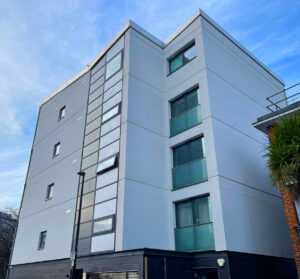
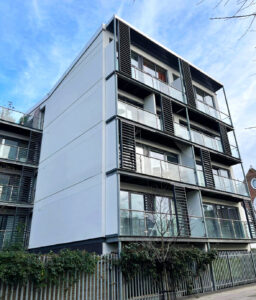
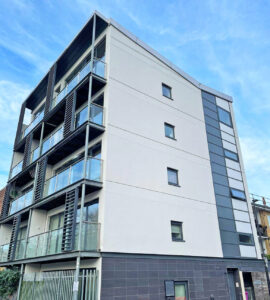
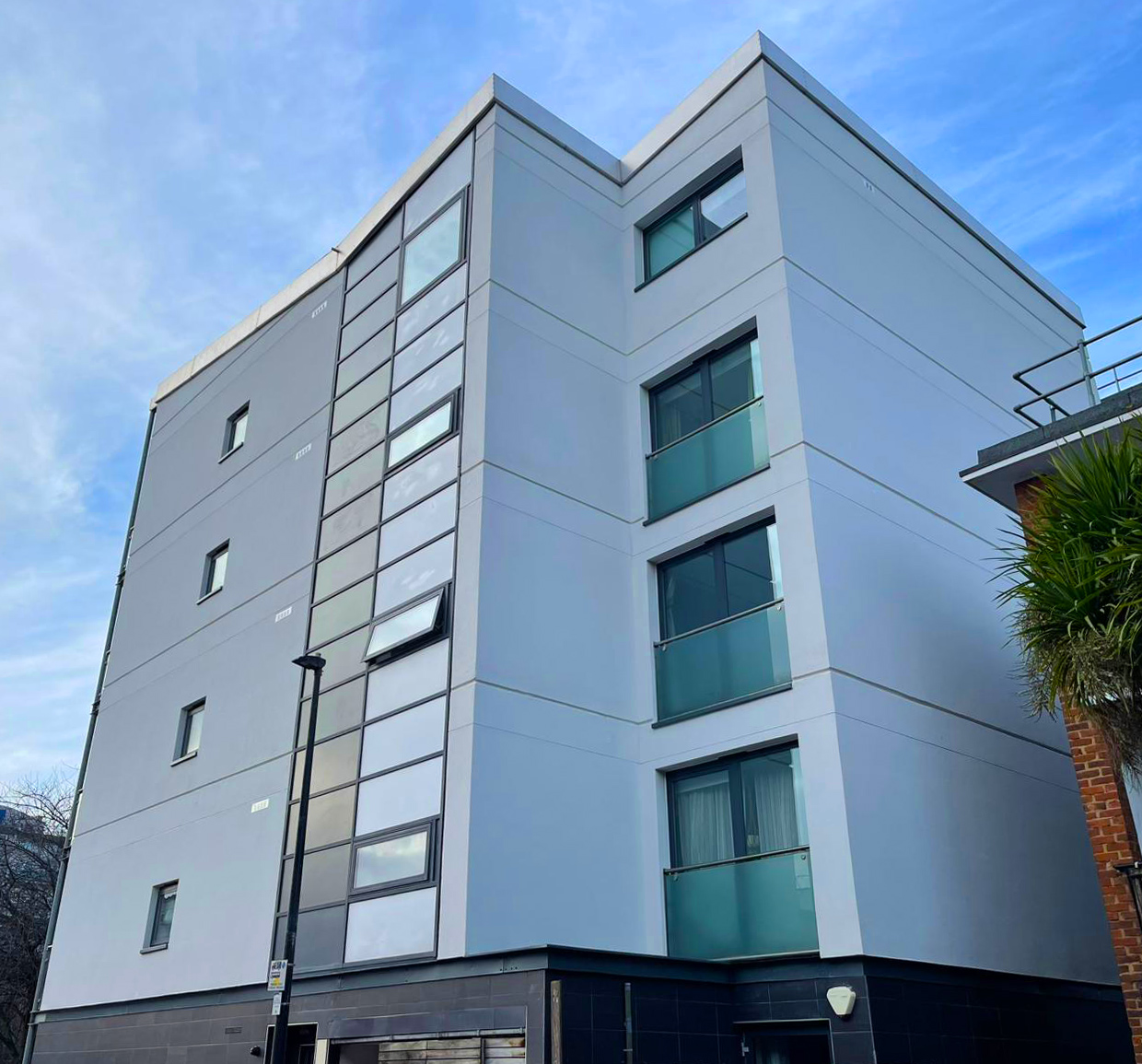
The completed façade has a noticeably calmer and more unified appearance. The silicone render finish gives the building a cleaner visual rhythm, softening the ageing character of the original structure while introducing sharper definition around openings and edges.
Up close, the success of the project lies in the detailing. Window interfaces, sill junctions and termination points have been handled with restraint, allowing the façade to feel cohesive rather than segmented. The render system sits comfortably across the elevation, creating a consistent surface with subtle depth and shadow variation as natural light moves across the building throughout the day.
There’s a practical honesty to the finished result. Nothing feels excessive or decorative for the sake of it. Instead, the building now carries the quiet confidence of a façade designed to perform well and age properly within a demanding urban environment.
Outcomes & Performance Highlights
Thermal Performance
The upgraded façade achieved a U-value of 0.21 W/m²K, significantly improving the thermal efficiency of the building and helping reduce heat loss across the envelope. Residents now benefit from improved internal comfort and greater energy performance year-round.
Enhanced Appearance
The refurbishment has completely transformed the external identity of the building, replacing an ageing façade with a cleaner and more contemporary finish that better reflects modern residential expectations.
Durability & Weather Resistance
The reinforced render system provides long-term protection against weather exposure while offering improved resistance to cracking, impact and moisture ingress. The vapour-permeable silicone finish also supports the long-term health of the building fabric.
Efficient Project Delivery
Despite the compressed programme, strong coordination between Benx, SPS Envirowall and Stoneguard Ltd ensured materials were delivered on time and installation works progressed efficiently, supported by regular technical engagement on site.
Sustainable Upgrade to Existing Housing
Rather than requiring extensive redevelopment, the project demonstrates how refurbishment-led approaches can meaningfully improve the performance, lifespan and visual quality of existing residential buildings while minimising disruption to occupants.
35 Florida Street stands as a strong example of how a carefully designed EWI solution can elevate both the performance and presence of an existing residential building. Through a combination of technical precision, collaborative delivery and considered detailing, the project has transformed the building into a more energy-efficient, resilient and visually cohesive part of the London streetscape.