



Overview
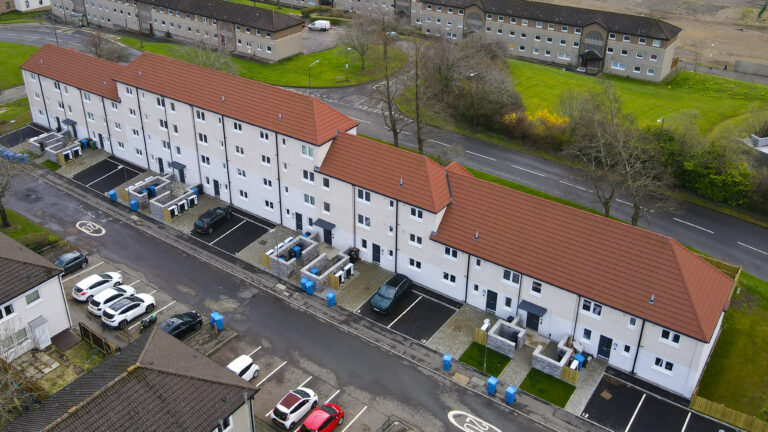
Located in Craigshill, Livingston, the Katherine Street refurbishment represents a thoughtful response to both immediate building recovery and longer-term housing performance. Following a significant fire in early 2022, the project moved beyond straightforward reinstatement and became an opportunity to substantially improve the quality, resilience and energy efficiency of 25 existing flats.
For Almond Housing Association, the scheme aligned with two pressing priorities: reducing fuel poverty for tenants and responding to the climate emergency through practical, measurable improvements to existing housing stock. Rather than treating the façade, glazing and heating system as separate upgrades, the project adopted a more joined-up approach, improving the building fabric while introducing low carbon technologies designed to support warmer, more efficient homes.
Client Challenge
The Katherine Street project brought together several overlapping challenges, each requiring careful consideration.
Improving existing housing after fire damage
The building required reinstatement following a significant fire, but the client and project team recognised the opportunity to do more than simply return the flats to their previous condition. The aim was to create higher-performing homes that would serve residents well into the future.
Addressing fuel poverty through fabric improvement
With energy costs continuing to place pressure on households, the project needed to deliver tangible improvements to thermal performance. A more efficient external envelope was essential to help reduce heat loss, support lower running costs and improve day-to-day comfort for residents.
Supporting the transition away from gas heating
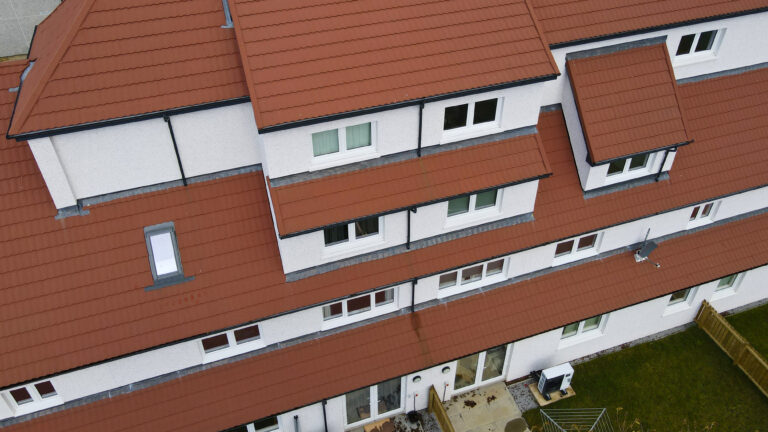
The existing mains gas-fired boilers were replaced with individual air source heat pump systems, providing space heating and hot water to each flat. As Almond Housing Association intended to use the scheme as a trial for ASHP installation within its properties, the surrounding fabric upgrades needed to help maximise the benefit of this low carbon heating approach.
Working with non-traditional construction
The block’s non-traditional construction presented additional technical and coordination challenges. The chosen solution had to work with the existing building, support the wider retrofit strategy and be delivered within the constraints of a refurbishment environment.
Benx Solution
SPS Envirowall was selected to provide the external wall insulation and render system, forming a key part of the building’s wider energy efficiency upgrade. By improving the thermal performance of the external envelope, the system helped reduce heat loss through the façade and supported the effective operation of the newly installed air source heat pumps.
This fabric-first thinking was central to the project. Low carbon heating systems can only perform at their best when the building around them is sufficiently insulated and well considered. The Envirowall system therefore played an important role in helping Katherine Street move away from ageing gas infrastructure while improving comfort and efficiency for residents.
The refurbishment also included new double glazing, ventilation measures and environmental sensors, allowing Almond Housing Association to monitor indoor air quality and better understand how heat and ventilation benefits are being achieved in practice. Together, these measures created a more complete retrofit solution, with the façade upgrade acting as a critical foundation for the building’s improved performance.
Close collaboration between Almond Housing Association, McTaggart Construction, Ramsay McMichael and the wider project team was essential. The nature of the existing structure meant that detailing, sequencing and coordination had to be carefully managed throughout, particularly where the insulation system interacted with openings, junctions and other façade interfaces.
Visual and Design Commentary
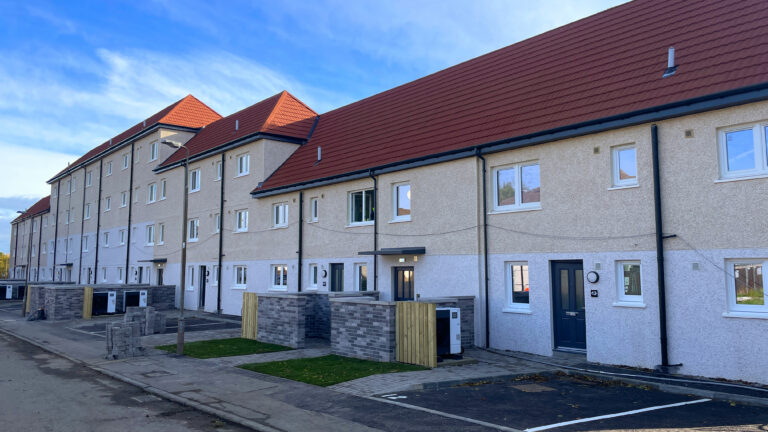
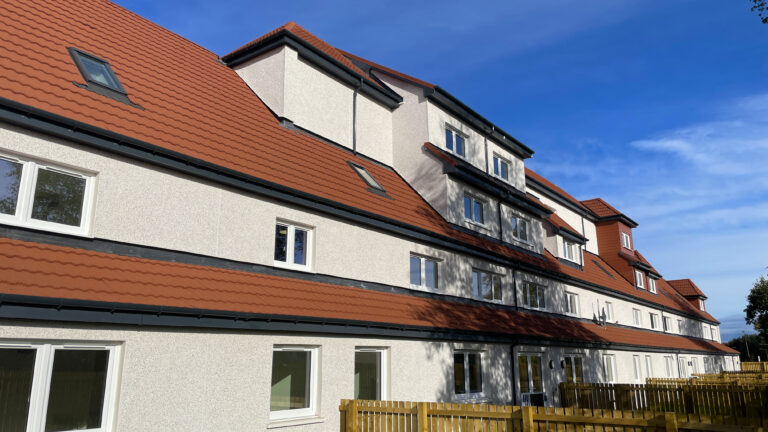
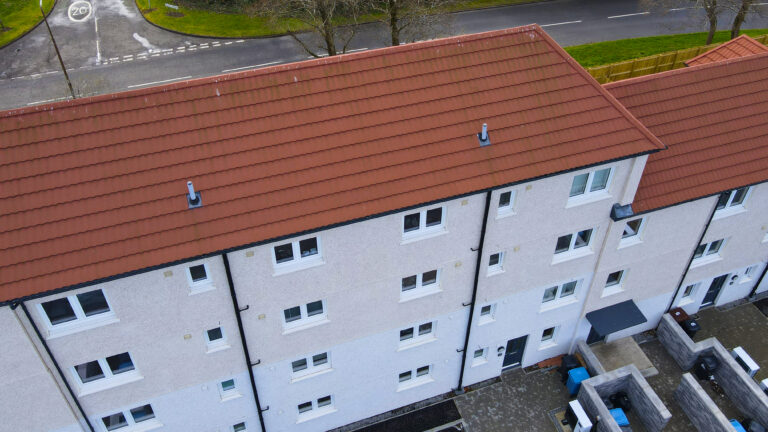
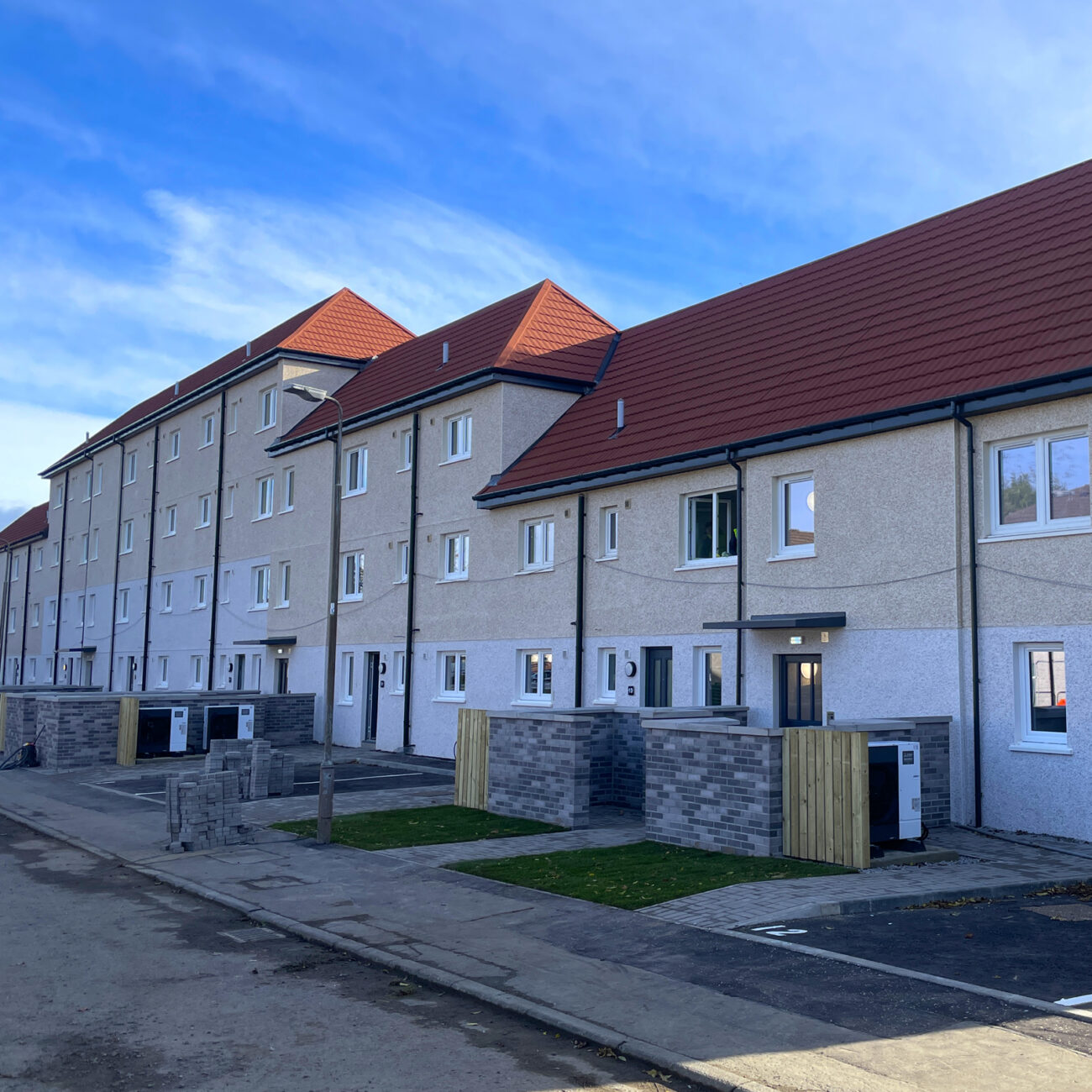
Visually, the completed Katherine Street refurbishment gives the block a much cleaner, more settled appearance. The render finish creates a unified external treatment, helping to simplify the elevations while giving the building a renewed sense of care and permanence.
The façade no longer reads as a building that has simply been repaired. Instead, it feels considered and purposeful, with the external wall insulation and render system bringing consistency across the elevations and helping the block sit more confidently within its residential setting.
Around windows and key junctions, the detailing needed to work hard. These areas are often where retrofit projects reveal their complexity, particularly when new fabric improvements are being applied to older or non-traditional structures. At Katherine Street, the finished envelope supports a more cohesive appearance while contributing to the performance uplift required by the wider refurbishment strategy.
Outcomes and Performance Highlights
A more efficient building envelope
The installation of the external wall insulation and render system significantly improved the thermal performance of the building fabric. This was essential in helping reduce heat loss and supporting the move to individual air source heat pumps for each flat.
Support for lower carbon heating
By replacing gas boilers with ASHP systems, the project introduced a cleaner heating and hot water solution. The improved façade performance helps ensure that these systems can operate more effectively, making the building better suited to low carbon living.
Resident comfort and fuel poverty reduction
The upgrades are expected to have a meaningful impact on residents by improving warmth and helping reduce energy demand. For Almond Housing Association, this was closely linked to its wider ambition to reduce fuel poverty and create homes that are more affordable to run.
A stronger retrofit model for future projects
As a trial for ASHP installation across Almond Housing Association properties, Katherine Street provides useful learning for future refurbishment and development work. The project demonstrates how existing housing can be upgraded through a coordinated approach that brings together fabric improvement, clean heat, glazing, ventilation and monitoring.
High-quality homes after a challenging starting point
What began as a response to fire damage became a wider transformation of the block. The completed project now provides residents with improved homes that are safer, warmer, more efficient and better aligned with Scotland’s net zero ambitions.
Testimonials
“We are delighted to have completed this important project for Almond Housing Association. This refurbishment demonstrates our continued commitment to delivering sustainable, energy-efficient homes that will benefit residents for years to come. The Katherine Street project shows how refurbishment work can combine fire safety reinstatement with forward-thinking environmental improvements.”
Janice Russell, Managing Director, McTaggart Construction
“The Katherine Street project followed a significant fire and presented an opportunity to ensure the block was as energy efficient as possible for our customers. The non-traditional construction of the block presented a number of challenges which the team from McTaggart overcame alongside our consultants, Ramsay McMichael, and our in-house development team. We are delighted with the end result – high quality homes.”
Iona Taylor, Director of Asset Management, Almond Housing Association